


Best Mouse for Valorant in 2026: Pro Settings, Gear, and What Actually Works
Guides & Resources
Jun 02 2026
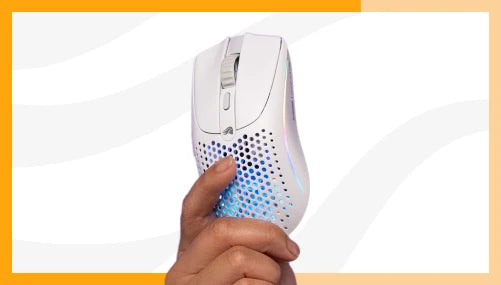
For Valorant, the hardware floor is a mouse under 70g, polling at 1,000 Hz or higher, with a sensor that tracks accurately at the DPI competitive players actually use. The Model O Eternal - Wired covers that baseline at 55g and $39.99. For players who want wireless without a latency trade-off, the Model O3 Wireless runs 8,000 Hz wirelessly at 66g and $159.99.
What Valorant Demands from Your Mouse
Valorant is a tactical shooter with rounds that run roughly 30 to 50 minutes. Your crosshair is on screen for most of that time. The mouse is the only piece of hardware in your setup that is physically present in every input you make - every pre-aim, every micro-adjust, every flick.
Most genres tolerate a heavier or less precise mouse because inputs are varied and pace is forgiving. Tactical shooters are not forgiving. At the low sensitivity settings most competitive Valorant players run, every crosshair adjustment requires a physical arm movement. Every gram you hold, you also stop and redirect. A mouse that is too heavy, too slow to report, or imprecise at your working DPI introduces a cost on every input - small but cumulative.
Your mouse is not going to close a skill gap. But the wrong one will open one.
For a full breakdown of how grip style, hand size, and game type should drive your mouse decision before you get to Valorant-specific specs, see our gaming mouse buying guide.
The Three Specs That Matter
Weight
In Valorant, most competitive players run low sensitivity - wide arm sweeps rather than wrist flicks. At that setting, a heavier mouse means more physical effort on every aim correction throughout the match. The consensus threshold most competitive players target is under 70g.
The Model O Eternal - Wired weighs 55g ±4g. At $39.99 it clears that threshold by a margin while remaining very affordable. The 128mm length and 67mm width fit medium-hand palm and claw grip - the two grip styles most common in competitive play.
The Model O3 Wireless weighs 66g with the 200mAh battery installed, 59g without it. Both figures sit under the 70g line.
PC Gamer reviewed the Model O Eternal and highlighted its weight as a core strength at its price point.
"The 55 g weight makes this Eternal mode significantly lighter than the OG's 67 g mass, and firmly leans into its ultralight origins. It's one of the lightest mice I've used in recent times, and it feels quite responsive." - Reece Bithrey, PC Gamer
Polling Rate
Polling rate determines how often the mouse tells your computer where it is in space. At 1,000 Hz, one report per millisecond. At 8,000 Hz, one report every 0.125ms.
For Valorant, 1,000 Hz is the functional competitive baseline - the hardware is not the limiter at standard play. The step to 8,000 Hz produces measurable improvement in cursor smoothness at high movement speeds, which matters in fast flick and tracking scenarios specific to tactical shooters.
The Model O Eternal - Wired polls at 1,000 Hz. The Model O3 Wireless polls at up to 8,000 Hz wirelessly.
Sensor
For Valorant, the sensor needs to track accurately at the DPI settings competitive players actually use - without hardware acceleration, angle snapping, or smoothing that distorts the physical input you made.
The Model O Eternal - Wired uses an optical sensor with a 50 to 12,000 DPI range. The Model O3 Wireless uses the BAMF 3.0 30K sensor with a 50 to 30,000 DPI range. Both perform accurately within competitive DPI ranges. The ceiling difference - 12,000 DPI versus 30,000 DPI - is irrelevant at the settings Valorant players actually use.
DPI and Sensitivity in Valorant
DPI is not the number that controls how fast your crosshair moves. In-game sensitivity is not that number either. The number that matters is eDPI.
eDPI = DPI x In-game Sensitivity
At 400 DPI with a 0.5 in-game sensitivity, your eDPI is 200. At 800 DPI with a 0.4 in-game sensitivity, your eDPI is 320. Two different settings, nearly the same result on screen. This is why comparing DPI settings between players means nothing without the in-game sensitivity attached.
Most competitive Valorant players run between 400 and 800 DPI with low in-game sensitivity, producing eDPI values typically in the 200 to 400 range.
What that means for hardware: at 400 DPI, the optical sensor in the Model O Eternal - Wired and the BAMF 3.0 30K in the Model O3 Wireless both track cleanly. The sensor ceiling - 12,000 DPI vs 30,000 DPI - is not a competitive factor at these settings. What matters is that neither sensor adds processing at your working DPI.
RTINGS tested the Model O3 Wireless and published full tracking and latency data.
Wired vs. Wireless for Competitive Valorant
The latency argument against wireless is largely settled at this polling rate tier. The Model O3 Wireless runs at up to 8,000 Hz wirelessly - a higher report frequency than the Model O Eternal - Wired at 1,000 Hz. Performance is not the reason to choose wired. What remains is cable drag and battery management.
Cable drag. In claw and fingertip grip at low sensitivity, micro-corrections are constant. A stiff cable creates resistance in directional changes - small, cumulative, present on every movement. Wireless removes that variable entirely.
Battery management. The Model O3 Wireless runs up to 71 hours per 200mAh pack at 2.4 GHz. The InfinitePlay System means you swap the pack rather than charge the mouse - the Guardian Battery System keeps it connected throughout the swap. Running flat mid-ranked is the one wireless failure mode in competitive play. InfinitePlay removes it.
GamesRadar+ reviewed the Model O3 Wireless in a hands-on piece.
The Model O Eternal - Wired at $39.99 is the argument for wired: no battery to manage, no wireless receiver, lower cost. The Model O3 Wireless at $159.99 removes the cable at the cost of battery management and budget.
Our Valorant Picks
Model O Eternal - Wired: The Hardware Baseline
55g. 1,000 Hz. Optical sensor. $39.99.
Those four items cover the Valorant hardware floor. The sensor tracks accurately at competitive DPI settings. The polling rate meets the standard competitive threshold. The weight sits well under 70g. The 80 million rated mechanical switches mean click longevity is not a near-term concern.
For Valorant players who want to stop thinking about their gear and start thinking about their gameplay - this is the entry point. It does not have the wireless premium, the higher polling rate ceiling, or the optical switches of the O3 Wireless. It has everything the hardware floor requires and nothing it does not.
Model O3 Wireless: The Cable-Free Option
59g without battery. 8,000 Hz wireless. BAMF 3.0 30K. $159.99.
For Valorant players who have already decided wireless is the play, the Model O3 Wireless runs 8,000 Hz at 2.4 GHz and weighs 59g unloaded - 66g with the battery installed. Both figures clear the 70g line. The 130 million rated optical switches handle high click-volume sessions.
The InfinitePlay battery swap covers the one scenario where wireless loses: dying mid-match. The Guardian Battery System keeps the mouse connected while you swap packs. Up to 71 hours per 200mAh pack at 2.4 GHz means you are likely swapping on a weekly schedule, not a session-by-session one.
PCGamesN reviewed the Model O3 Wireless in a hands-on piece.
Frequently Asked Questions
What mouse should I use for Valorant in 2026?
The hardware floor for Valorant is a mouse under 70g, polling at 1,000 Hz minimum, with an optical sensor that tracks without hardware acceleration at your working DPI. The Model O Eternal - Wired at 55g and $39.99 covers that baseline on a wired setup. The Model O3 Wireless at 66g with battery and 8,000 Hz wireless covers it without the cable.
What DPI should I use for Valorant?
Most competitive Valorant players run 400 to 800 DPI with low in-game sensitivity, producing eDPI values typically between 200 and 400. The eDPI figure (DPI multiplied by in-game sensitivity) is what determines crosshair speed on screen - the DPI number alone says nothing. Both the optical sensor in the Model O Eternal - Wired and the BAMF 3.0 30K in the Model O3 Wireless track accurately at those settings.
Does polling rate matter for Valorant?
1,000 Hz is the standard competitive baseline - one report per millisecond. The Model O Eternal - Wired polls at 1,000 Hz; the Model O3 Wireless polls at up to 8,000 Hz wirelessly. For most Valorant players, 1,000 Hz is not the hardware ceiling. The step to 8,000 Hz produces measurable smoothness gains at high movement speeds. Whether that translates to ranked results depends on the individual.
Should I use a wired or wireless mouse for competitive Valorant?
At 2.4 GHz with high polling rates, wireless mice operate without meaningful latency disadvantage over wired at standard polling rates. The Model O3 Wireless polls at up to 8,000 Hz wirelessly - faster in report frequency than the Model O Eternal - Wired at 1,000 Hz. The real distinction is cable drag versus battery management. Wired removes battery as a variable; wireless removes the cable. The right choice depends on which variable bothers you more.
Is an expensive mouse actually going to improve my Valorant rank?
Hardware does not close skill gaps. What it can do is remove hardware-introduced constraints - a mouse that is too heavy for your sensitivity setting adds physical overhead on every aim correction; a sensor that drifts at your working DPI introduces noise you cannot see. The Model O Eternal - Wired at $39.99 removes both constraints without requiring a premium investment. Above the hardware floor, improvement comes from practice, not gear.
See the full Glorious mouse lineup at gloriousgaming.com/collections/mice.